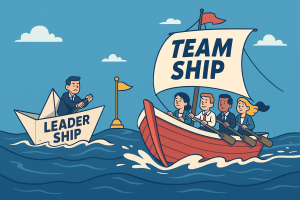

Every strength optimized for one context becomes a limitation in the next.
That’s The Optimization Trap.
And you’re standing in it right now.
- The decision-making speed that built your company? Now it prevents your team from thinking independently.
- The problem-solving ability that saved projects? Now it trains people to bring you problems instead of solutions.
- The high standards that created your culture? Now they make people wait for your approval instead of trusting their judgment.
You got here by being the smartest person in the room. You’ll stay stuck here for the same reason.
You hire talented people. They start strong—independent, thoughtful, proactive.
Then you watch them turn into everyone else. Waiting for your input. Checking before they act. Escalating decisions they should own.
And you think, “Did I hire wrong?”
So you hire someone better. More experienced. Double the salary. Incredible resume.
Watch it happen again.
The common denominator isn’t them.
You’re optimizing yesterday’s solutions when you need to architect tomorrow’s capabilities.
I spent 20 years in IT consulting watching brilliant technical people get promoted into leadership and immediately become bottlenecks. They’d optimize their team’s code, their processes, their communication—everything except the one thing that mattered.
The architecture that made them the hero was now making them the constraint.
Most CEOs hire consultants (the expensive kind with PowerPoints). Run personality assessments (DISC, Myers-Briggs, Predictive Index, whatever’s trendy). Send everyone to team building retreats (ropes courses, anyone?).
None of it sticks.
Not because you’re not trying. You’re trying everything. Someone else’s team got results from Myers and probably Briggs, too—why not yours?
These approaches are illusions that make you feel like you’re fixing something. You’re doing what good leaders are supposed to do—investing in your people, bringing in expertise, trying proven methods.
But they’re all transformational—changing the form of what already exists. What you need is transcendational—creating what should be.
These fail because they’re optimizing the dependency instead of eliminating it.
87% of companies say they’re facing “skills gaps.”
→ Most don’t have a talent shortage.
→ They have an optimization addiction.
They keep polishing the system that’s failing them.
The real question isn’t “How do we improve this?”
It’s “What should cease to exist entirely?”
That’s strategic elimination.
Try this:
List the top 5 decisions you made last week. For each one, ask: “Could someone else have made this if the system was designed differently?”
If the answer is yes more than twice, you’re not dealing with a capability problem.
You’re dealing with an architecture problem.
And you can’t delegate or train or kumbayah your way out of bad architecture.
What are you optimizing that should be eliminated instead?